
IMPACT REPORT 2023
Grow with Shrooms
A JCI Rise Project
Initiated by JCI Dhaka Imperial (Bangladesh)


Abstract
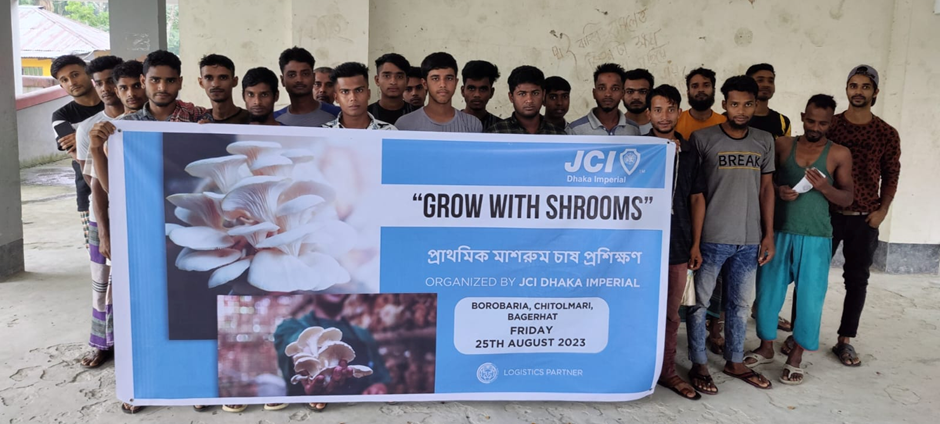
The "Grow with Shrooms" initiative spearheaded by JCI Dhaka Imperial stands as a transformative effort, providing vital mushroom farming skills to the community of Borobaria, Chitolmari, Bagerhat. This endeavor not only cultivates agricultural knowledge but acts as a conduit for broader socio-economic change. The project's success is evident in the participants' deep understanding of mushroom farming concepts and their practical application of financial literacy skills, a testament to JCI Dhaka Imperial's commitment to holistic community development. As villagers eagerly plan to integrate these skills into their mushroom farming ventures, envisioning economic stability and even a Mushroom village, the project exemplifies the JCI ethos of empowering individuals for sustainable impact. In essence, "Grow with Shrooms" is not just about farming; it's a JCI-driven pathway toward lasting economic empowerment and community sustainability.
Background
The "Grow with Shrooms" initiative spearheaded by JCI Dhaka Imperial stands as a transformative effort, providing vital mushroom farming skills to the community of Borobaria, Chitolmari, Bagerhat. This endeavor not only cultivates agricultural knowledge but acts as a conduit for broader socio-economic change. The project's success is evident in the participants' deep understanding of mushroom farming concepts and their practical application of financial literacy skills, a testament to JCI Dhaka Imperial's commitment to holistic community development. As villagers eagerly plan to integrate these skills into their mushroom farming ventures, envisioning economic stability and even a Mushroom village, the project exemplifies the JCI ethos of empowering individuals for sustainable impact. In essence, "Grow with Shrooms" is not just about farming; it's a JCI-driven pathway toward lasting economic empowerment and community sustainability.
Project Phases
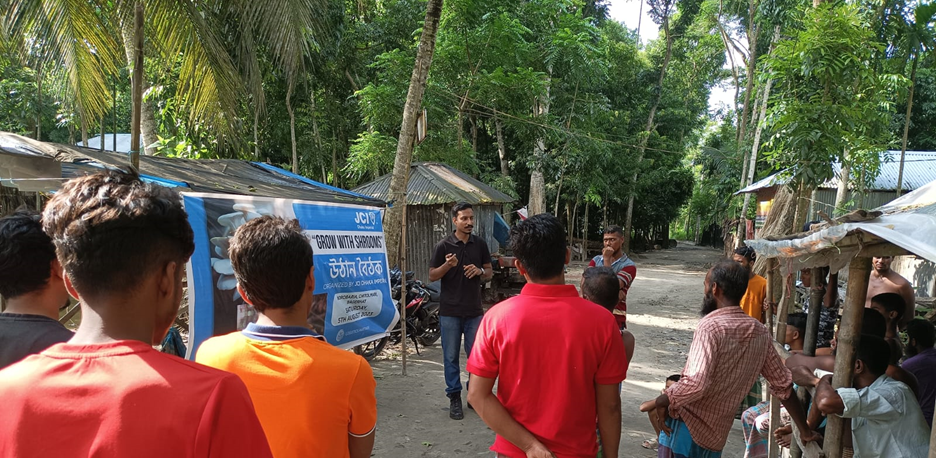
The "Grow with Shrooms" initiative spans from May 2023 to August 2023 and is designed to empower marginalized communities through mushroom farming education.
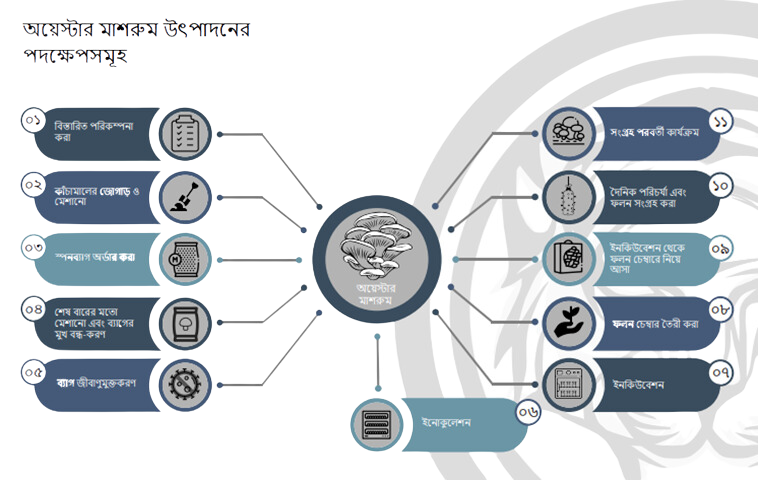
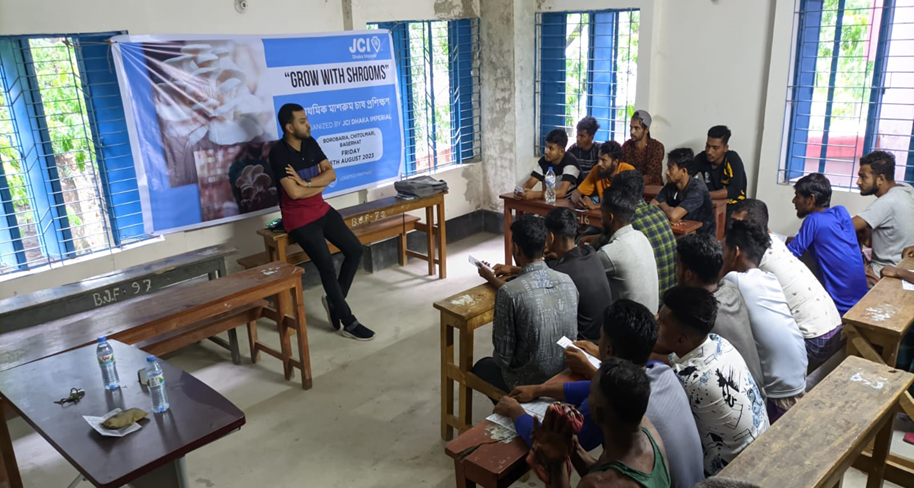
- The first intervention on July 5th, 2023 encompasses project introduction, sign-ups, an awareness campaign on mushroom farming, and basic training sessions.
- Second intervention on July 25th, 2023, focusing on a recap of previous training, financial literacy training covering budgeting and profitability, group activities, and an open forum for questions and discussions. And top performers will be selected for the next phases.
- Third intervention on August 5th, 2023 involves the distribution of technical resources to the selected candidate such as substrate, spawn, and tools, guidance on setting up and navigating sales platforms, discussions on effective marketing strategies, and the sharing of success stories and challenges.
- The project concludes with the fourth intervention on August 25th, 2023 featuring a progress review, individual business monitoring, analysis of traction data, adjustments, strategies for future growth, and reflections, goal setting, and the formal conclusion of the project.
- Third intervention on August 5th, 2023 involves the distribution of technical resources to the selected candidate such as substrate, spawn, and tools, guidance on setting up and navigating sales platforms, discussions on effective marketing strategies, and the sharing of success stories and challenges.
- The project concludes with the fourth intervention on August 25th, 2023 featuring a progress review, individual business monitoring, analysis of traction data, adjustments, strategies for future growth, and reflections, goal setting, and the formal conclusion of the project.

Methodology
The "Grow with Shrooms" initiative employs a structured four-phase methodology to empower marginalized communities through mushroom farming education. The first intervention on July 5th combines project introduction, sign-ups, an awareness campaign, and basic training. The second intervention on July 25th focuses on financial literacy training, including budgeting and profitability strategies. The third intervention on August 5th centers on resource distribution, sales platform utilization, and discussions on marketing strategies. The project concludes with the fourth intervention on August 25th, involving 'Intense Business Monitoring (IBM)' for progress review, individual business monitoring, and future strategy discussions. Throughout, a continuous feedback loop ensures ongoing support and optimization of the initiative's impact.

Data Representation and Analysis
The analysis of participant responses in the "Grow with Shrooms" initiative provides a comprehensive understanding of the impact on knowledge acquisition and community engagement.
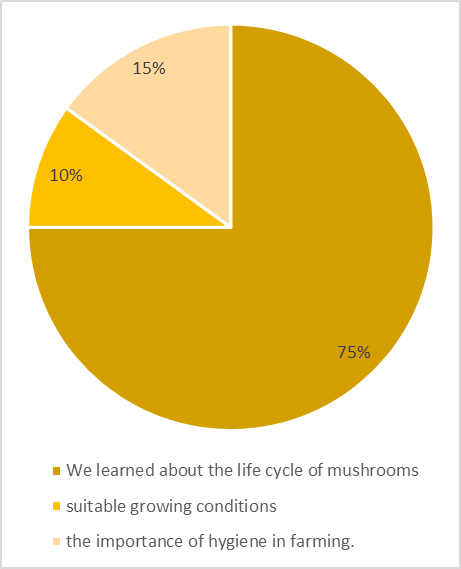
Key Concepts of Mushroom Farming:
The majority of participants, accounting for 75%, demonstrated a robust understanding of the fundamental life cycle of mushrooms. While suitable growing conditions received acknowledgment from 10%, and the importance of hygiene in farming was recognized by 15%, these aspects are deemed crucial for successful cultivation, laying a strong foundation for participants.
Actively Engaging in Mushroom Farming:
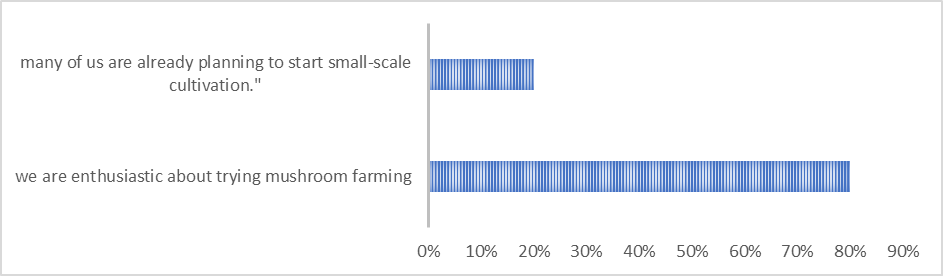
A significant 80% of participants expressed enthusiasm about trying mushroom farming, indicating a positive disposition towards practical application. Additionally, 20% were already planning small-scale cultivation, signaling tangible initiatives within the community sparked by the initiative.
Impact on Economic Situation:
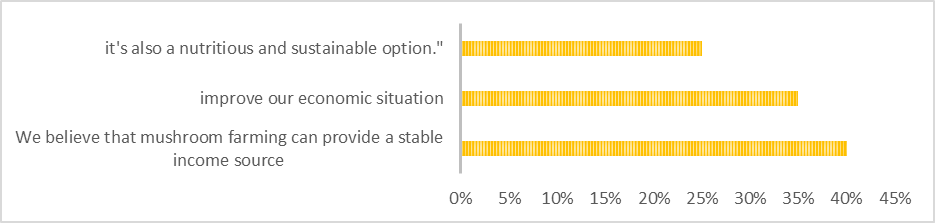
In terms of the economic impact, 40% acknowledged mushroom farming as a stable income source, aligning with the initiative's economic empowerment goals. Another 35% foresaw an improvement in their economic situation, while 25% recognized the nutritional and sustainable benefits of mushroom farming.
Financial Concepts and Strategies:
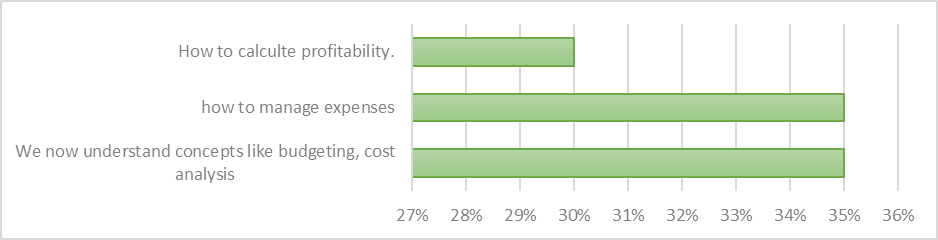
Regarding financial literacy, participants exhibited a balanced understanding, with 35% comprehending budgeting and cost analysis, another 35% understanding the importance of managing expenses, and 30% grasping the intricacies of calculating profitability.
Implementation of Financial Strategies:
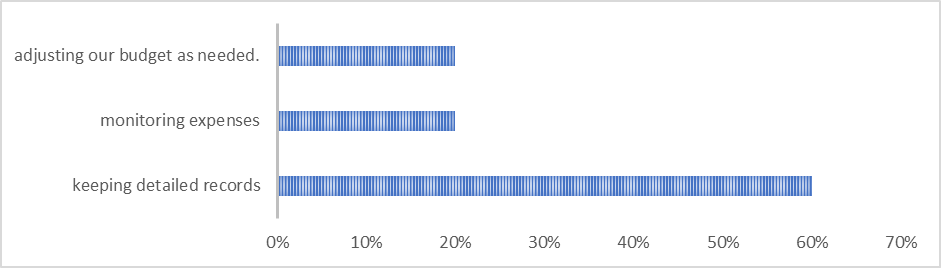
The implementation of financial strategies highlighted a predominant emphasis on meticulous record-keeping, with 60% showcasing a commitment to financial prudence. An additional 20% each expressed a commitment to monitoring expenses and adjusting budgets as needed.

Future Plans for Mushroom Farming
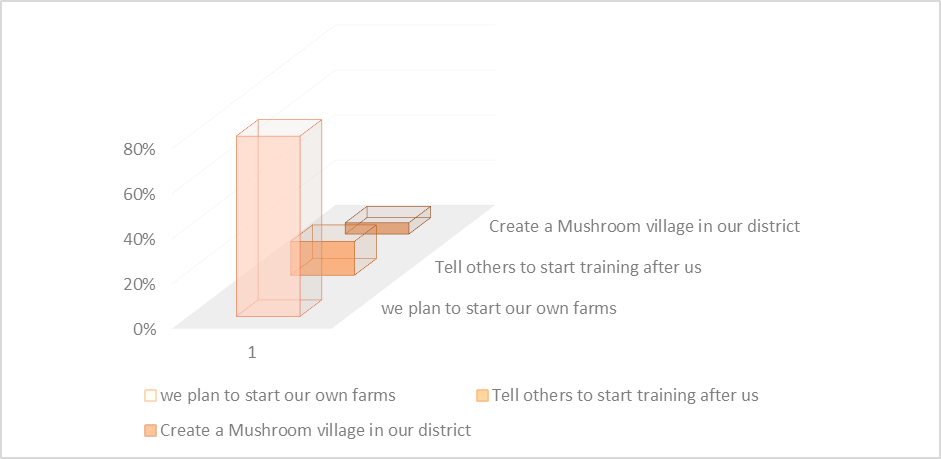
Looking ahead, a striking 80% aspired to start their farms, indicating a potential surge in mushroom farming adoption. The visionary 5% planning to establish a Mushroom village hinted at the initiative's long-term impact on community development.
Summary of
Survey Findings
The analysis of responses from 287 participants in the "Grow with Shrooms" initiative reveals a significant impact on knowledge acquisition and community engagement. Among them, 215 (75%) demonstrated a solid understanding of the fundamental mushroom life cycle, while 29 (10%) recognized suitable growing conditions, and 43 (15%) grasped the importance of hygiene.
Regarding engagement, 230 participants (80%) expressed interest, and 57 (20%) were already planning small-scale cultivation, indicating practical application and actionable initiatives within the community.
In terms of economic impact, 115 participants (40%) acknowledged mushroom farming as a stable income source. Additionally, 100 (35%) foresaw an improvement in their economic situation, and 72 (25%) recognized nutritional and sustainable benefits.
Financial literacy gains were evident, with 172 participants demonstrating a balanced understanding of budgeting and profitability.
Implementation strategies showed commitment, with 172 participants emphasizing detailed record-keeping, 57 prioritizing expense monitoring, and an additional 57 expressing readiness to adjust budgets.
Looking ahead, 230 participants aspired to start their farms, signaling a potential surge in mushroom farming adoption. The visionary goal of establishing a Mushroom village was expressed by 14 participants, hinting at long-term community development impact. In summary, the data highlights successful knowledge transfer and a commitment from participants to integrate mushroom farming into economic pursuits and future community development.

Recommendations
- Tailored Educational Modules: Craft future initiatives with tailored educational modules focusing on foundational concepts such as the life cycle of mushrooms, growing conditions, and hygiene. Ensure a balanced emphasis on theoretical understanding and practical application to enhance participant engagement.
- Community Integration Strategies: Build upon the success of "Grow with Shrooms" by implementing community integration strategies. Encourage active participation and small-scale cultivation plans, fostering a sense of ownership and community-driven initiatives.
- Economic Empowerment Focus: Future initiatives should maintain a strong focus on economic empowerment. Continue highlighting mushroom farming as a stable income source, incorporating financial literacy training, and emphasizing the nutritional and sustainable benefits to attract wider community participation.
- Refined Financial Literacy: Enhance financial literacy components by offering more in-depth training on budgeting, cost analysis, and profitability calculations. This will empower participants with comprehensive financial skills essential for successful mushroom farming ventures.
- Digital Tools for Record-Keeping: Integrate digital tools for record-keeping to streamline financial management. This will enhance the effectiveness of initiatives by providing participants with accessible and efficient methods for monitoring expenses and adjusting budgets.
- Long-Term Vision Encouragement: Encourage long-term visions similar to the establishment of a Mushroom village. Support participants in translating aspirations into actionable plans for sustainable community development, leveraging the success of individual farming ventures.
- Continuous Feedback Loop: Establish a continuous feedback loop to capture participant experiences and insights. This iterative approach will enable organizers to adapt and refine future initiatives based on real-time feedback, ensuring ongoing success and relevance.

Conclusion
This project stands as a testament to grassroots efforts aligning with global goals. Aligned with Sustainable Development Goals (SDGs), the project addresses poverty, hunger, health, economic growth, and sustainable communities. Crucially, the project embodies the JCI course of action by empowering youth, recognizing their role in sustainable development. "Grow with Shrooms" contributes to a SMART Bangladesh, specifically in fostering a SMART Economy. By leveraging abundant labor and integrating modern techniques, the project aligns with national objectives for economic resilience.
As we celebrate the success of "Grow with Shrooms," it symbolizes a model for holistic community development. Its impact on education, empowerment, and economic growth exemplifies JCI's principles, advances SDGs, and propels Bangladesh toward a SMART and resilient future.

""In the soil of adversity, opportunity blooms. With 'Grow with Shrooms,' we're not just cultivating mushrooms; we're nurturing dreams, fostering resilience, and sowing the seeds of sustainable change."
Syeda Sabera Arefin (Juthika)
2023 Local President, JCI Dhaka Imperial
(Bangladesh)
"True empowerment lies in enabling others to flourish. Through 'Grow with Shrooms,' we're not only teaching mushroom farming; we're igniting a spark of possibility, transforming communities, and paving the path for a brighter, more prosperous future."
Syed Shafayat Karim
Project convenor & 2024 local EVP, jci dhaka imperial (bangladesh)
For more info

Project Contact:
Syeda Sabera Arefin
2023 Local President,
JCI Dhaka Imperial (Bangladesh)
Phone: +8801825815508
E-mail: arefin.syeda@gmail.com
Convenor:
Syed Shafayat Karim
2024 Local Executive Vice President,
JCI Dhaka Imperial (Bangladesh)
Phone: +8801795590858
E-mail: shafayat0858@gmail.com
Social pages

